
Gutters do more than keep water off your sidewalk. When they are sized and installed correctly, they protect the roof edge, fascia, and siding from the repeated soaking that leads to rot and moisture damage. In Portland, where rain is a near-constant presence for much of the year, a gutter system that cannot keep up with the roof it serves creates ongoing problems rather than solving them. Rose & Timber Roofing installs gutters in Portland, Lake Oswego, Beaverton, West Linn, and surrounding communities, planning each system around the roof it will serve, including roof area, run lengths, pitch, fascia condition, corners, outlets, downspouts, discharge, and access.
Why Gutter Performance Matters More in Portland
Portland International Airport climate normals show about 36.92 inches of annual precipitation and 157 days per year with measurable precipitation, according to the National Weather Service and NOAA Climate Normals. That is not a handful of heavy storms, it is sustained, recurring rainfall across most of the year. A gutter system here has to perform reliably over and over, not just survive one big downpour. That makes capacity, slope, and a clear discharge path just as important as the gutters themselves.
What Actually Makes a Gutter System Work
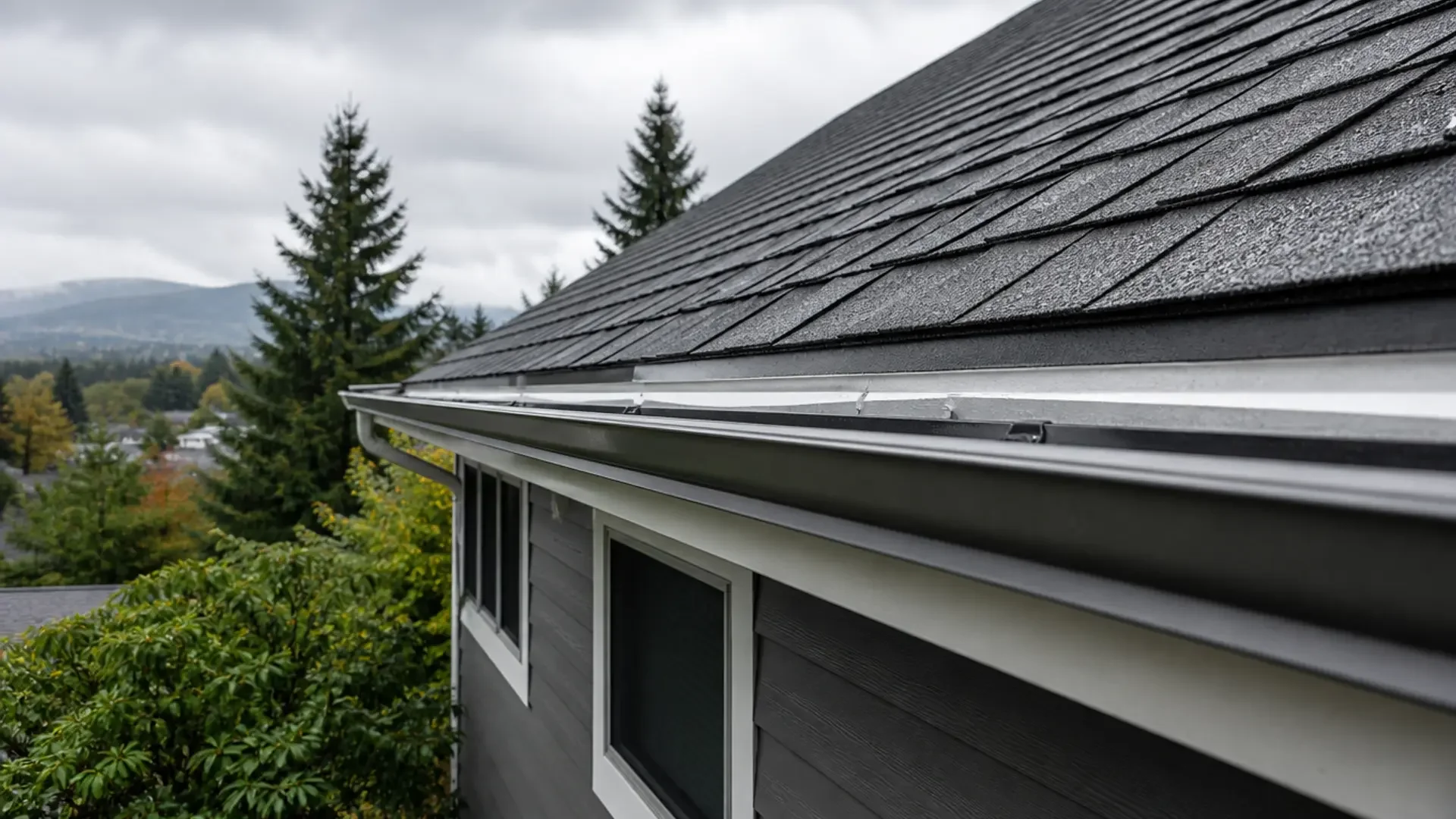
Gutters only protect the roof edge when runoff can enter the channel, move along a continuous slope, pass through the outlets and downspouts, and discharge without backing up, based on City of Portland property-maintenance guidance and broader gutter-installation industry review. When any one of those steps breaks down, water finds another way off the roof, usually by overflowing behind the gutter and soaking the fascia and eaves underneath. That is why overflow is more often a sign of a capacity, slope, obstruction, attachment, or discharge problem than simply "too much rain."
When Rose & Timber Roofing plans a gutter installation, the sizing and downspout placement are evaluated against the roof itself, including:
Roof area and total run length
Roof pitch
Number of corners and outlets
Planned discharge route for the downspouts
Condition of the fascia that will support the system
Confirming the fascia can securely hold the new gutters is part of that evaluation, since a gutter system is only as reliable as what it is mounted to.
Material and Component Options
Gutter options identified in Rose & Timber Roofing's service planning include aluminum, copper, and steel materials, along with different gutter sizes, hanger spacing, outlets, elbows, guards, and drainage extensions. These choices affect how much water the system can move and how it discharges away from the home, so they are selected based on what the specific roof and property need rather than a single standard setup.
Signs Your Gutters May Need a Closer Look
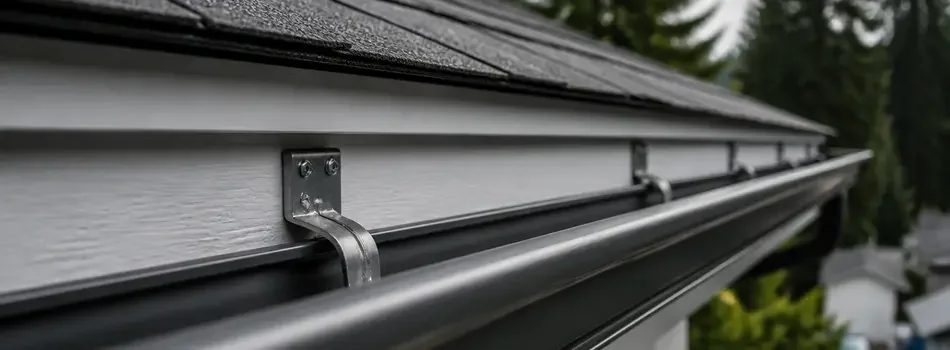
A few warning signs point to a gutter system that is not keeping up with the roof it serves:
Overflow during ordinary rain, not just heavy storms
Sagging sections along the run
Water spilling behind the gutter instead of into it
Staining on the fascia or siding below the roof edge
Discharge pooling near the foundation or building
Repeated overflow at the roof edge keeps fascia, soffits, eaves, and nearby wall areas wet, which increases the chance that moisture reaches vulnerable roof-edge materials over time, according to industry review of Portland gutter installations. Spotting these signs early is the first step toward evaluating whether the gutter system or related roof-edge details need attention.
What Affects Installation Scope
Every roof is different, and so is every gutter installation. Material choice, linear footage, number of stories, corners, downspouts, guards, any necessary removal of old gutters, site access, and change orders during the project all factor into the scope of a gutter installation. This is also why Rose & Timber Roofing checks installation quality against specific criteria, including slope, seams, hanger strength, water flow, downspout discharge, cleanup, and workmanship warranty verification, rather than relying on appearance alone.
A Building Condition, Not Just a Curb Appeal Feature
Portland property-maintenance rules require roofs to be weather-tight and drainage systems to be adequate so that rainwater does not cause dampness in exterior walls or building interiors, according to the City of Portland. That framing is useful for homeowners too. A gutter system is part of how a roof manages water, not a separate cosmetic add-on, which is part of why matching the system to the roof during installation matters.
Frequently Asked Questions
How do roof size and pitch affect gutter and downspout planning?
Larger roof areas and steeper pitches move more water to the roof edge faster, which affects how gutters are sized and where downspouts and outlets need to be placed to keep up with that flow.
What signs suggest water is overflowing behind a gutter rather than draining through it?
Staining or wet patches on the fascia below the roofline, water visible behind the gutter trough during rain, and dampness on siding near the roof edge are signs that water is bypassing the gutter instead of flowing through it.
Why should fascia condition be checked before installing new gutters?
Gutters are mounted directly to the fascia, so if that wood is soft, rotted, or weakened, it cannot securely hold the hangers and the new system, regardless of how well the gutters themselves are sized or installed.
Get Your Gutters Evaluated
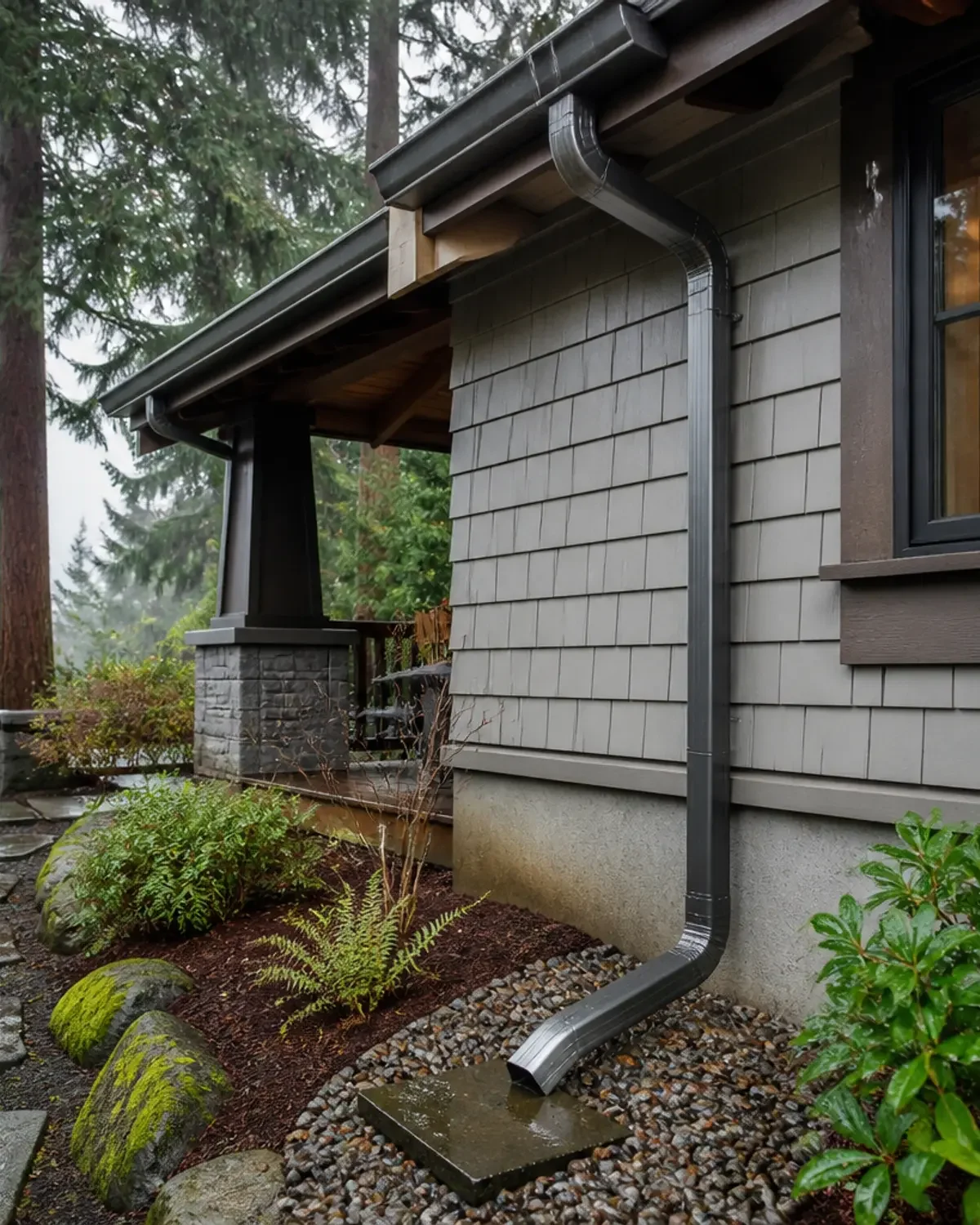
If you are seeing overflow, sagging, or staining along your roof edge in Portland, Lake Oswego, Beaverton, West Linn, Hillsboro, Tualatin, Tigard, Gresham, Oregon City, Happy Valley, Milwaukie, Clackamas, or Wilsonville, Rose & Timber Roofing can take a look at your current gutter system and roof edge. Call (971) 471-4432 to talk through what you are seeing and get your gutter installation planned around your actual roof.
