
Standing water on a flat or low-slope roof is more than a cosmetic nuisance in Portland. Keeping seams, flashing, and the roof surface wet for extended periods can accelerate wear and create conditions for leaks. Rose & Timber Roofing offers Flat Roof Repair and Built-Up Roofing services, giving Portland property owners a place to turn when ponding water raises questions about the condition of a flat roof.
Why Water Pools on a Flat Roof
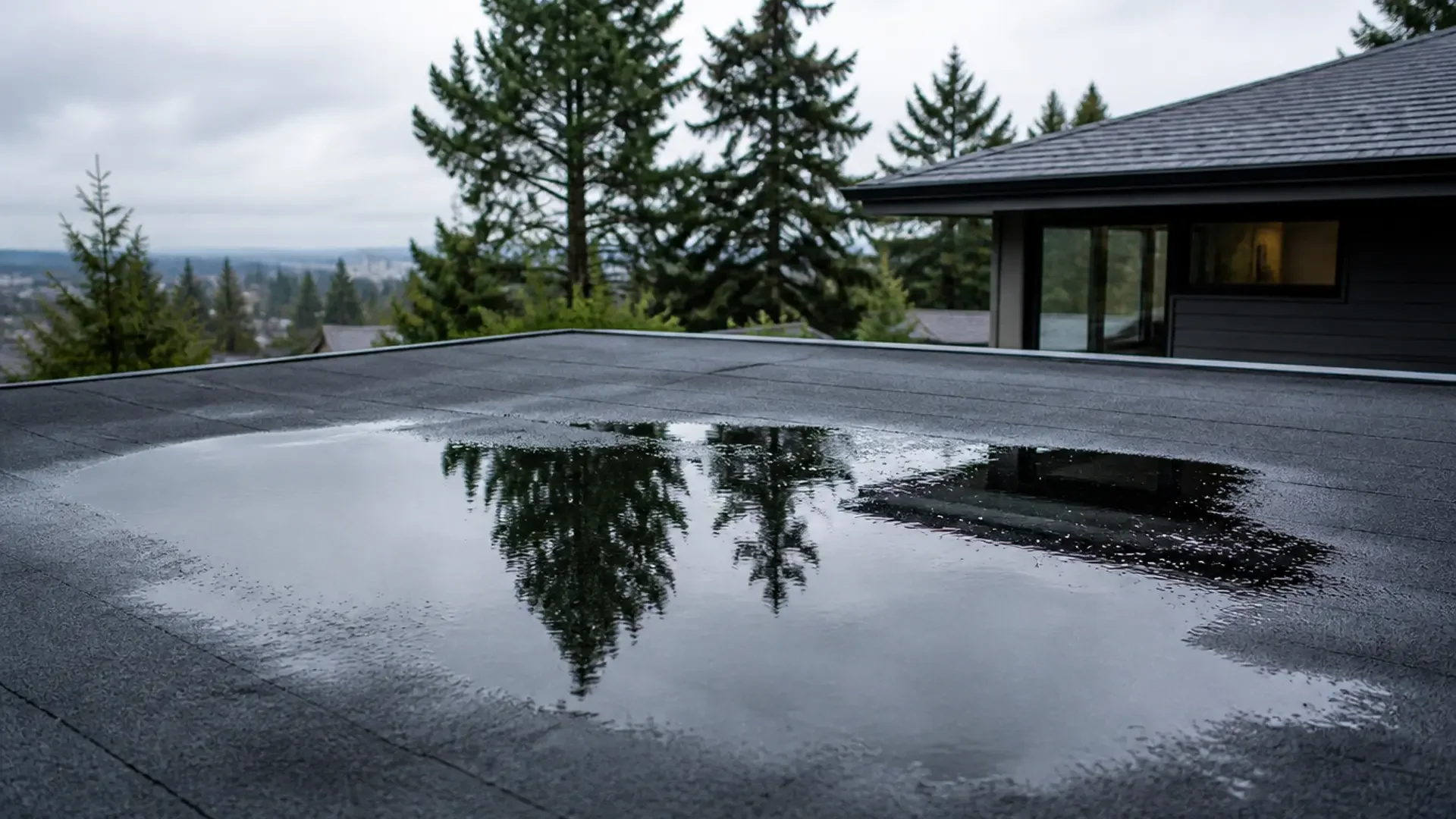
Ponding does not usually appear out of nowhere. It typically develops where one or more underlying conditions exist on the roof surface:
Inadequate slope that leaves water with nowhere to drain
Drainage paths that are blocked or restricted
Compressed insulation that creates a shallow depression
A roof deck that has deflected downward into a low spot
A pool of water sitting on the roof surface is often a visible symptom of one of these underlying issues rather than simply leftover rain.
Portland's Wet Season Makes This a Recurring Issue
According to the National Weather Service, nearly 90% of Portland's annual precipitation falls between mid-October and mid-May. That long stretch of recurring rain means a roof does not just face occasional heavy storms. It faces months of repeated wet exposure, which gives small drainage deficiencies the opportunity to become persistent problems rather than isolated incidents.
The City of Portland's property maintenance requirements reflect this reality, stating that roofs must be structurally sound, watertight, and have adequate drainage to prevent rainwater from causing dampness in walls or building interiors, as outlined in the City of Portland's Property Maintenance Code.
How Prolonged Ponding Can Damage the Roof
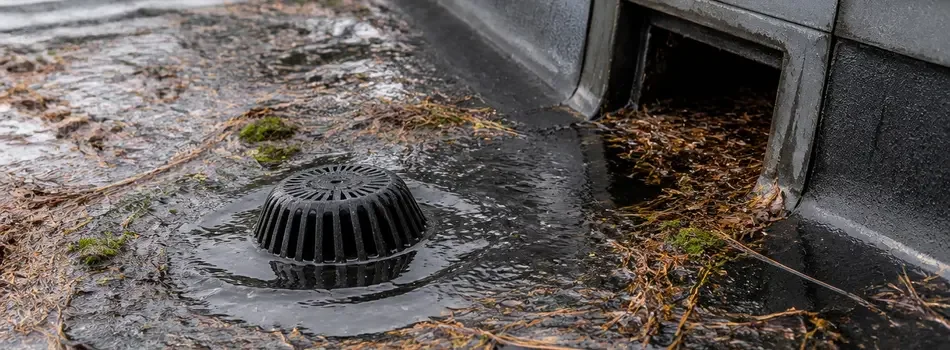
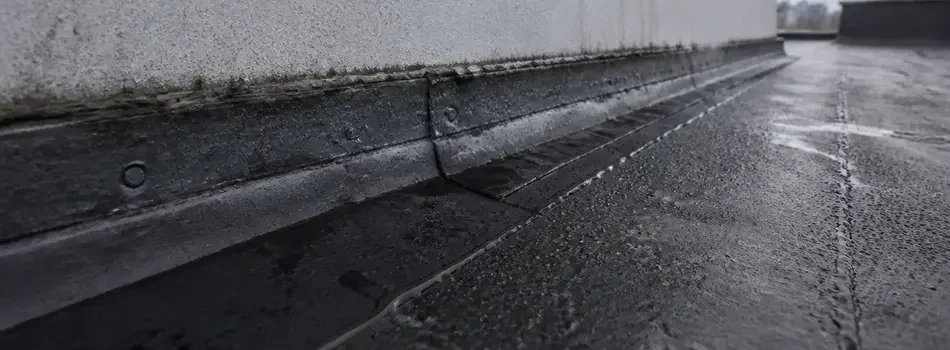
Water that lingers on a flat roof keeps seams, flashing details, and asphaltic roof surfaces wet for longer than they are designed to tolerate. Over time, this sustained moisture exposure increases the chance that a small defect, such as a seam separation or a flashing gap, develops into an active leak, according to Polyglass technical guidance.
There is also a reinforcing cycle worth understanding. Water weighs approximately 5.2 pounds per square foot for every inch of depth. In a roof area that has already begun to sag, that added weight can deepen the low spot further, which allows it to hold even more water. This cycle can make a minor dip worse over time if it goes unaddressed.
Roof drains, scuppers, gutters, and discharge paths can also become blocked by leaves, needles, sediment, or biological growth, which is one of the more straightforward causes of ponding. A proper assessment distinguishes a simple obstruction from a more involved slope, insulation, deck, seam, or flashing issue.
When Ponding Water Signals It Is Time to Call
Not every puddle on a flat roof requires an immediate call, but certain signs indicate it is time to move from watching the situation to having it evaluated:
ObservationWhat It May IndicateWater remains roughly 48 hours after rain stops and normal drying conditions returnA practical threshold for having the roof and drainage evaluated, per National Roofing Contractors Association guidance reflected in industry drainage standardsInterior leaks or ceiling staining below a low spotWater may already be penetrating the roof assemblySaturated insulation or soft areas on the roofMoisture has likely moved past the surface layerSeam separation, blistering, or wrinklingThe membrane or roof surface may be compromisedA visibly sagging roof areaPossible deck deflection that can worsen under added water weight
These signs are stronger reasons to seek a repair assessment promptly than ponding water alone, since they suggest the issue has moved beyond simple drainage.
Repair or a Larger Conversation
An isolated ponding issue may be suitable for a straightforward repair. According to Rose & Timber Roofing's services overview, an older roof that shows wear or is failing in multiple areas may call for a broader replacement discussion instead. A proper evaluation helps determine which situation applies before any work begins. You can review the company's repair and replacement decision framework for more on how that distinction is made.
Ponding water is also one of several conditions worth tracing back to its source, especially when interior staining is present. A related read on how water damage can develop from a failed roof detail covers how moisture can enter at vulnerable transitions and cause gradual, hidden damage over time.
Frequently Asked Questions
How long can water sit on a flat roof before it needs professional attention?
Water that remains for roughly 48 hours after precipitation stops and normal drying conditions return is a practical signal to have the roof and drainage evaluated.
Can a clogged drain cause ponding water, or does it mean the roof has a bigger drainage problem?
A blocked drain, scupper, or gutter can absolutely cause ponding on its own. An assessment is the best way to tell whether the cause is a simple obstruction or a larger slope, insulation, or deck issue.
Does ponding water always mean the roof needs replacement?
Not necessarily. An isolated ponding issue may be addressed with a repair, while an older roof that shows wear or failure in multiple areas may warrant a replacement conversation.
If you have noticed standing water on a flat roof in the Portland area that is not draining within a reasonable time, or you are seeing signs like interior staining, seam damage, or a sagging roof section, Rose & Timber Roofing can take a look. Call (971) 471-4432 to have your flat roof assessed. Rose & Timber Roofing serves Portland, Lake Oswego, Beaverton, West Linn, Hillsboro, Tualatin, Tigard, Gresham, Oregon City, Happy Valley, Milwaukie, Clackamas, and Wilsonville.
