
Roof flashing fails when water finds its way past worn sealant, loosened metal, a deteriorated vent boot, or a poorly integrated joint at a chimney or roof-to-wall transition. In Portland, where nearly 90% of annual precipitation falls between mid-October and mid-May and winter rain tends to be steady and prolonged rather than short bursts, even a small flashing weakness has plenty of opportunity to show itself. If you're already seeing a stain or a damp spot, a roof repair assessment from Rose & Timber Roofing can help trace the source and address it.
Why Flashing Is the First Thing to Check
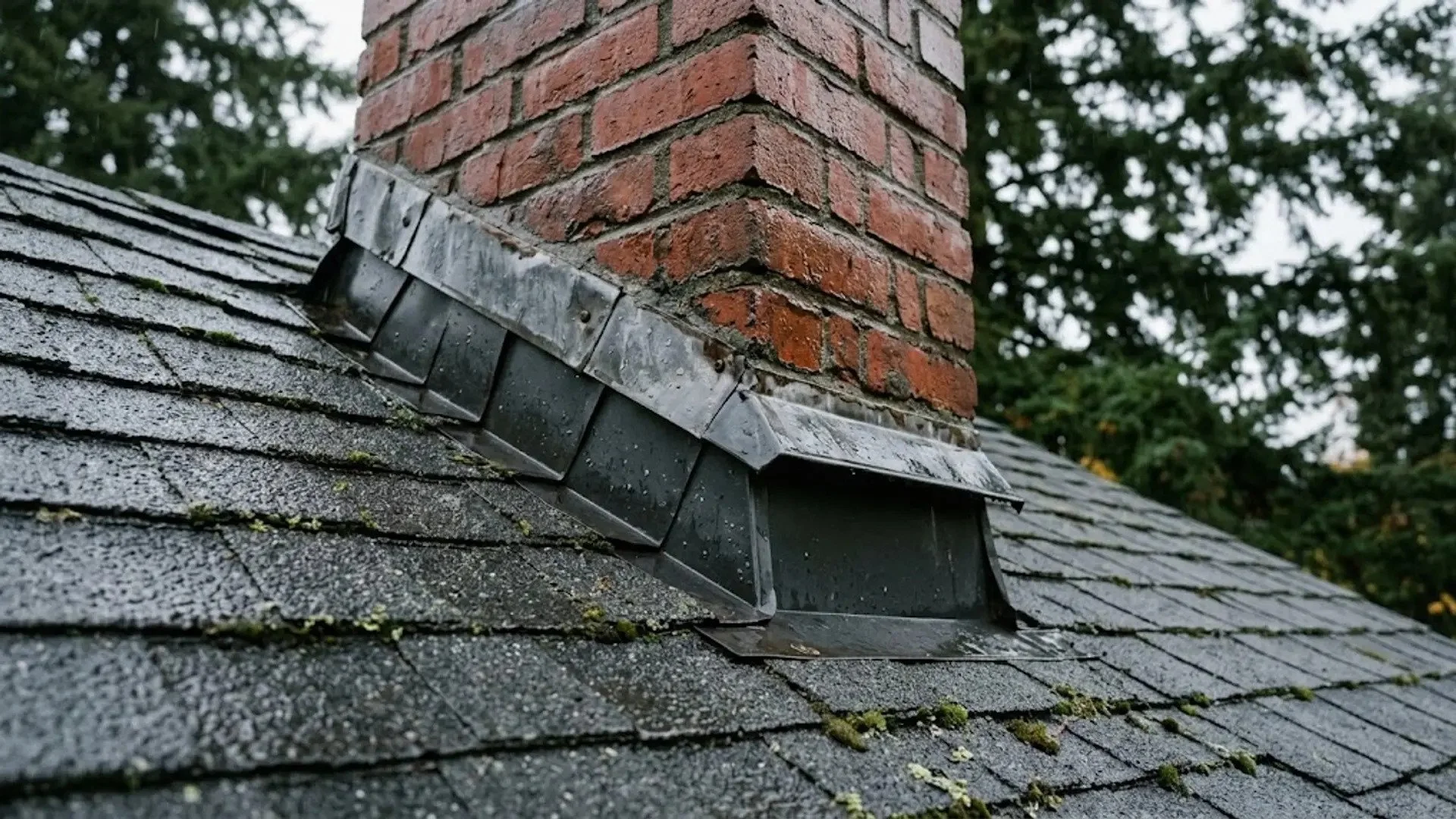
Flashing is the metal and sealant system that directs water away from the places where a roof changes direction or gets interrupted: vertical walls, chimneys, skylights, and pipe penetrations. On most roofs, step or base flashing is woven into the roofing courses themselves, while counter flashing sits above it and protects the upper edge of that system. Because these pieces rely on overlapping joints rather than a single continuous surface, a failure at one joint tends to produce a very localized leak rather than a widespread one.
Chimneys are a good example of how involved this can get. A chimney's flashing is often a multi-part assembly: an apron at the lower side, step flashing running along the sides, counter flashing set into the masonry, and sometimes a back pan or cricket on the uphill side. When a homeowner notices a leak near a chimney, it's rarely just one piece of metal. More often, one joint within that larger assembly has opened up, rusted, or lifted, and failing chimney flashing usually leaves visible signs at the masonry line before it ever reaches the ceiling.
Why the Stain Isn't Always Where the Leak Started
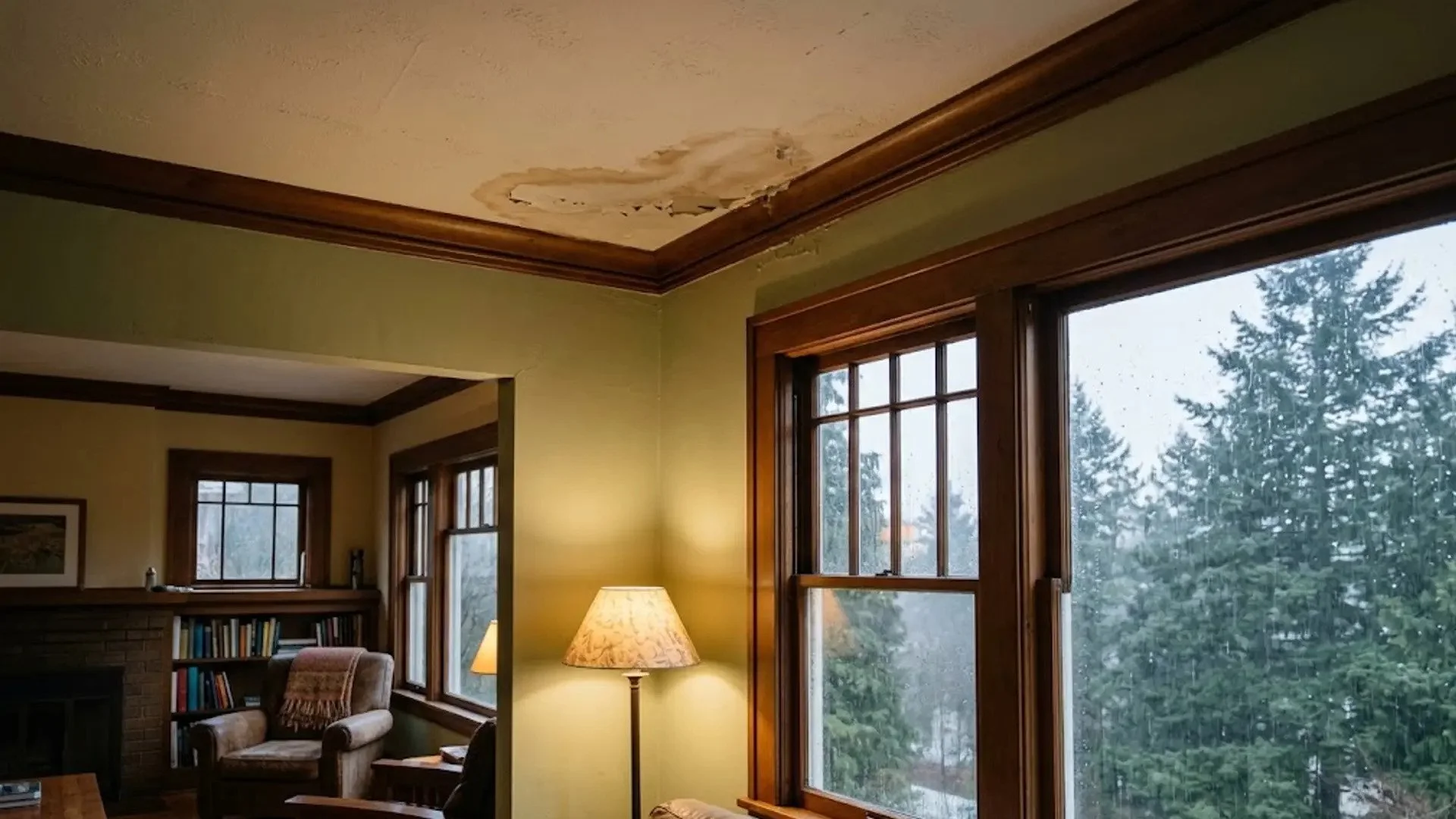
One of the more frustrating parts of a flashing leak is that the visible sign inside the home is often downhill from the actual entry point. Water can travel along the roof decking or framing for some distance before it finally shows up as a ceiling stain, bubbling paint, or a damp patch of attic insulation. That means the stain tells you water is getting in, but it doesn't necessarily tell you exactly where. This is also why tracing a leak is best left to someone who can inspect the roof directly rather than guessing based on where the damage appears indoors.
Signs Worth Watching For
New water staining or bubbling paint on ceilings or walls
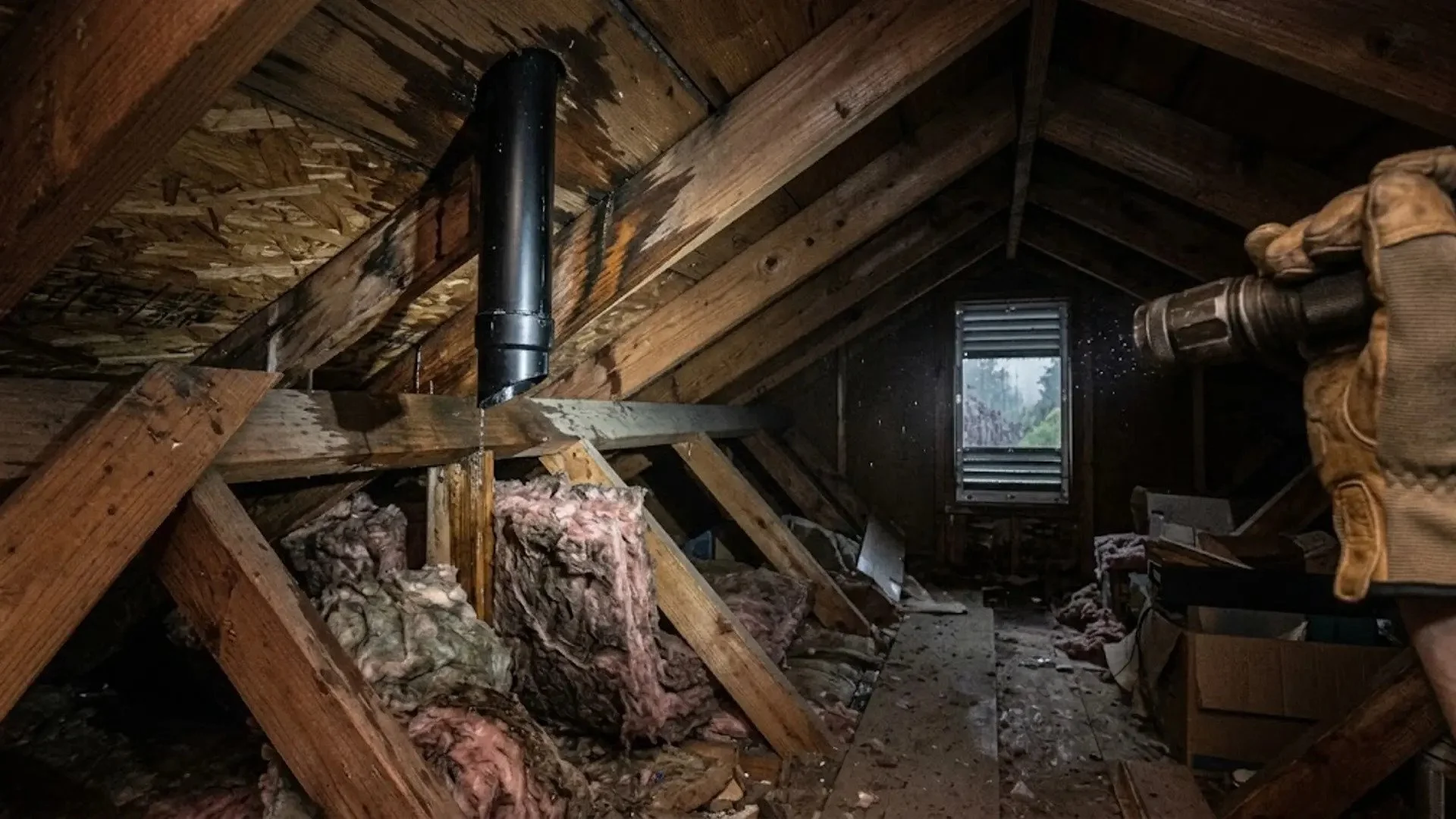
Damp attic insulation or dark trails along rafters
Visible lifting, rust, or open laps in flashing metal
Moss or debris sitting at valleys and flashing transitions, which can hold moisture against seals and edges longer than an open area would
Any of these, especially if they show up or worsen during a stretch of sustained rain rather than a single dramatic storm, is a reasonable point to have the source traced rather than continuing to monitor it.
Isolated Repair or Something Bigger?

Not every flashing issue means the whole roof is in trouble, and not every leak is isolated either. A single leak point tied to one flashing joint, with no other wear showing up elsewhere, is often a reasonable candidate for a spot repair. Multiple leak points, widespread wear, or an aging roofing system more often point toward a broader conversation about replacement rather than a one-off fix. This is a general framework for thinking it through, not a diagnosis, since every roof is different.
SituationWhat It Often SuggestsOne leak point, one affected flashing joint, roof otherwise soundPossible candidate for a spot repairMultiple leak points or recurring leaks in different areasWorth a closer look at overall roof conditionAging roofing system alongside flashing wearMay point toward a replacement conversation rather than a single repair
Why Portland's Rain Pattern Matters Here

Portland's wet season isn't defined by a handful of big storms. It's defined by duration. Precipitation at Portland International Airport averages roughly 36 to 37 inches a year, and higher-elevation West Hills locations see up to about 60 inches, so exposure varies across the metro area. The common thread everywhere is sustained wet weather for months at a time. A flashing joint that holds up fine during a quick shower can still let water through after days of steady rain, which is why leaks that come and go with the weather, rather than appearing only during the worst storm of the year, are worth paying attention to.
Rose & Timber Roofing repairs leaks and flashing issues for homeowners in Portland and surrounding communities, including Lake Oswego, Beaverton, West Linn, Hillsboro, Tualatin, Tigard, Gresham, Oregon City, Happy Valley, Milwaukie, Clackamas, and Wilsonville. The company is licensed, bonded, and insured under Oregon CCB #261217.
Frequently Asked Questions
Can a roof leak show up away from the failed flashing?
Yes, a roof leak can show up away from the failed flashing. Water often travels along decking or framing before it becomes visible indoors, so the ceiling stain or damp spot may be some distance from the joint that actually failed.
How can I tell whether a flashing issue is isolated or part of broader roof wear?
A flashing issue is more likely isolated when there's a single leak tied to one joint and no other signs of wear. Multiple leak points, or an aging roof alongside the flashing issue, are signs it's worth looking at the bigger picture.
Have a Flashing Leak in Portland? Let's Trace It.

If you're seeing a stain, damp insulation, or any of the warning signs above, Rose & Timber Roofing repairs leaks and flashing issues for homeowners in Portland, Lake Oswego, Beaverton, West Linn, and the rest of its service area. Call (971) 471-4432 to have someone trace the source of your leak.
