
If you're planning a roof replacement in Portland, you may be wondering whether your roof decking (the structural layer under your shingles) will need to be replaced too. The short answer: not always. A new roof doesn't automatically mean a new deck. The real condition of your decking is usually confirmed only after the old roofing materials come off, which is why a thorough inspection and an honest conversation about scope matter more than guesswork. This guide explains what roof decking is, the signs worth watching for, and why your estimate may include an allowance for decking work.
What Roof Decking Is (and Why a New Roof Doesn't Always Mean a New Deck)
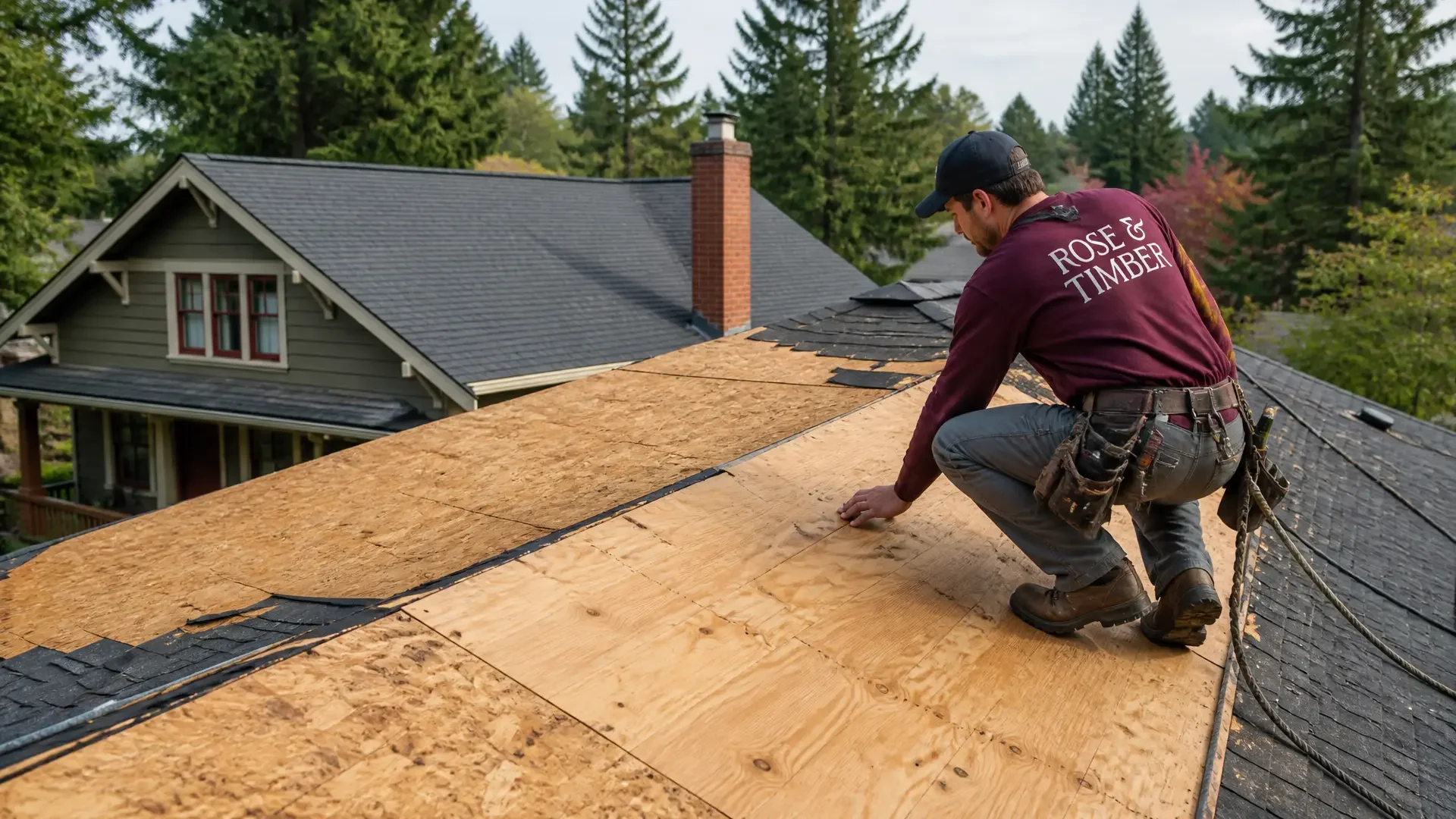
Roof decking, also called sheathing, is the structural layer that sits beneath your shingles, underlayment, and other roofing components. It's typically plywood, oriented strand board (OSB), or, on older homes, solid wood boards. Decking gives your roofing system something solid to attach to and plays a key role in the overall strength of your roof.
Because a new shingle roof and new decking are two different things, replacing one doesn't require replacing the other. Many reroofs reuse decking that's still structurally sound, while only sections with genuine damage get replaced. According to GAF, decking needs replacement when damage compromises its strength or its ability to securely hold roofing fasteners, not simply because a new roof is being installed.
Warning Signs Worth a Closer Look
Certain signs can point to decking that may need attention. These are clues that warrant a professional look, not a homeowner checklist for confirming replacement is needed:
Soft or spongy spots when walked on
Sagging areas across the roof plane
Cracking or crumbling wood
Discoloration on the decking or in the attic
A musty odor in the attic space
If you notice any of these, it's worth having the area assessed rather than testing it yourself. Based on GAF's guidance on roof deck wood rot, suspected deck rot should be evaluated and repaired by a professional, since both the true extent of the damage and the hazards of working at height call for the right expertise.
Why the Full Scope Often Isn't Clear Until Tear-Off
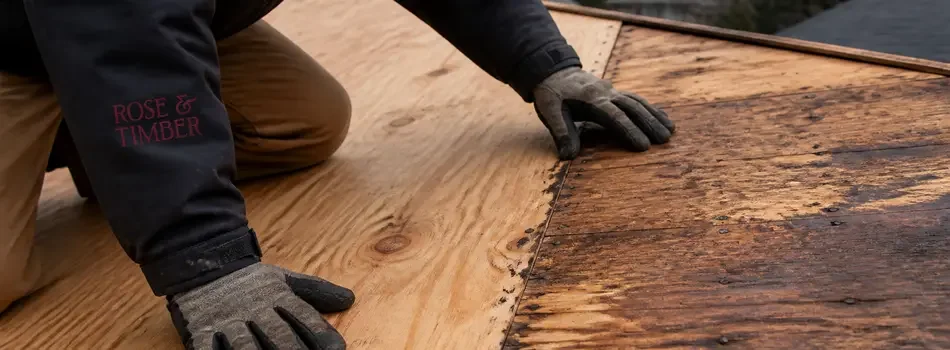
Even with a careful inspection, the true condition of your decking can be hard to confirm until the old roofing materials are removed. That's why an initial estimate may include a decking allowance rather than an exact number. The visible evidence only tells part of the story until the deck is exposed.
Decking costs depend on several factors: the material used, the pitch and complexity of your roof, how much decking actually needs replacing, and whether the damage also reaches insulation or rafters. A clear estimate separates material and labor for decking from the base cost of your reroof.
At Rose & Timber Roofing, we provide written estimates within 24 hours of a roof inspection, so you have clear documentation to reference as the project moves forward. If additional decking work is identified once tear-off begins, it's reasonable to ask a few questions before approving the change:
What evidence supports the additional scope?
Is the pricing based on a per-sheet, per-square-foot, or labor-hour basis?
What exactly does the allowance include?
How will you be asked to approve any changes before work continues?
Older Wood-Board Decks and Manufacturer Requirements
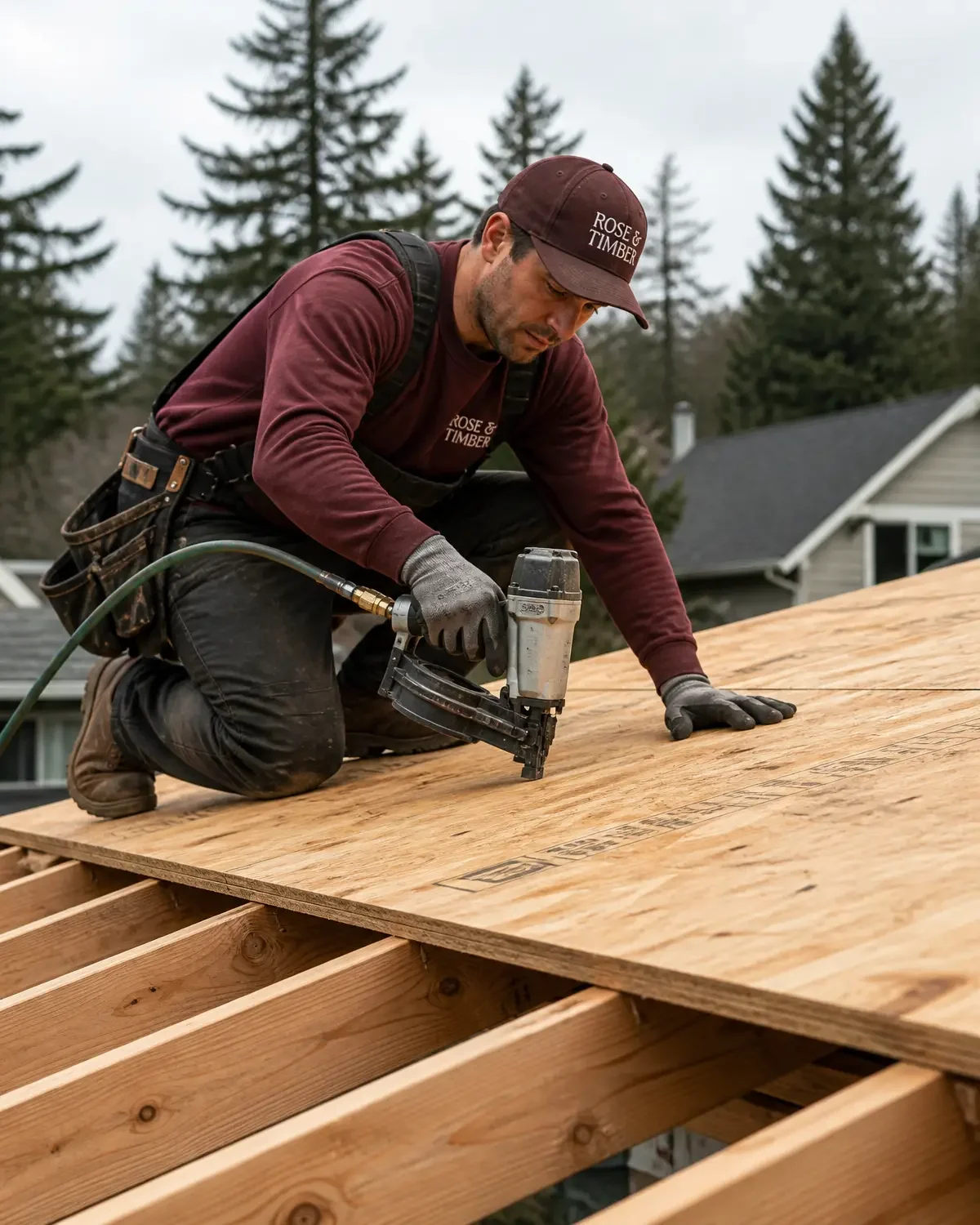
Many older Portland homes still have solid wood-board decking rather than plywood or OSB. Malarkey Roofing Products, one of the shingle manufacturers we install, recommends overlaying or replacing older wood-board decks with compliant sheathing when conditions warrant it. Board gaps of a quarter inch or more, along with warped, split, cracked, deteriorated, or rotted boards, are identified as deficient conditions under that guidance.
This is part of why broader substrate work can be the right call even when visible rot looks limited to one area. A manufacturer's requirements for a sound installation go beyond what's visible from the attic or the roof surface alone.
Addressing the Moisture Source, Not Just the Symptom
Decking damage is often a moisture problem, not just a wood problem. Moisture can reach your decking through a roof leak or through condensation building up in the attic. Replacing the damaged wood without identifying and addressing where that moisture is coming from can mean the same damage returns later.
Attic ventilation plays a role here. Air sealing helps limit moist indoor air from reaching the attic from below, while keeping soffit vents clear supports the airflow the space needs. Additional roof vents alone aren't a universal fix for moisture problems. The underlying cause still needs to be identified.
Planning a New Roof in Portland? Let's Talk Through It
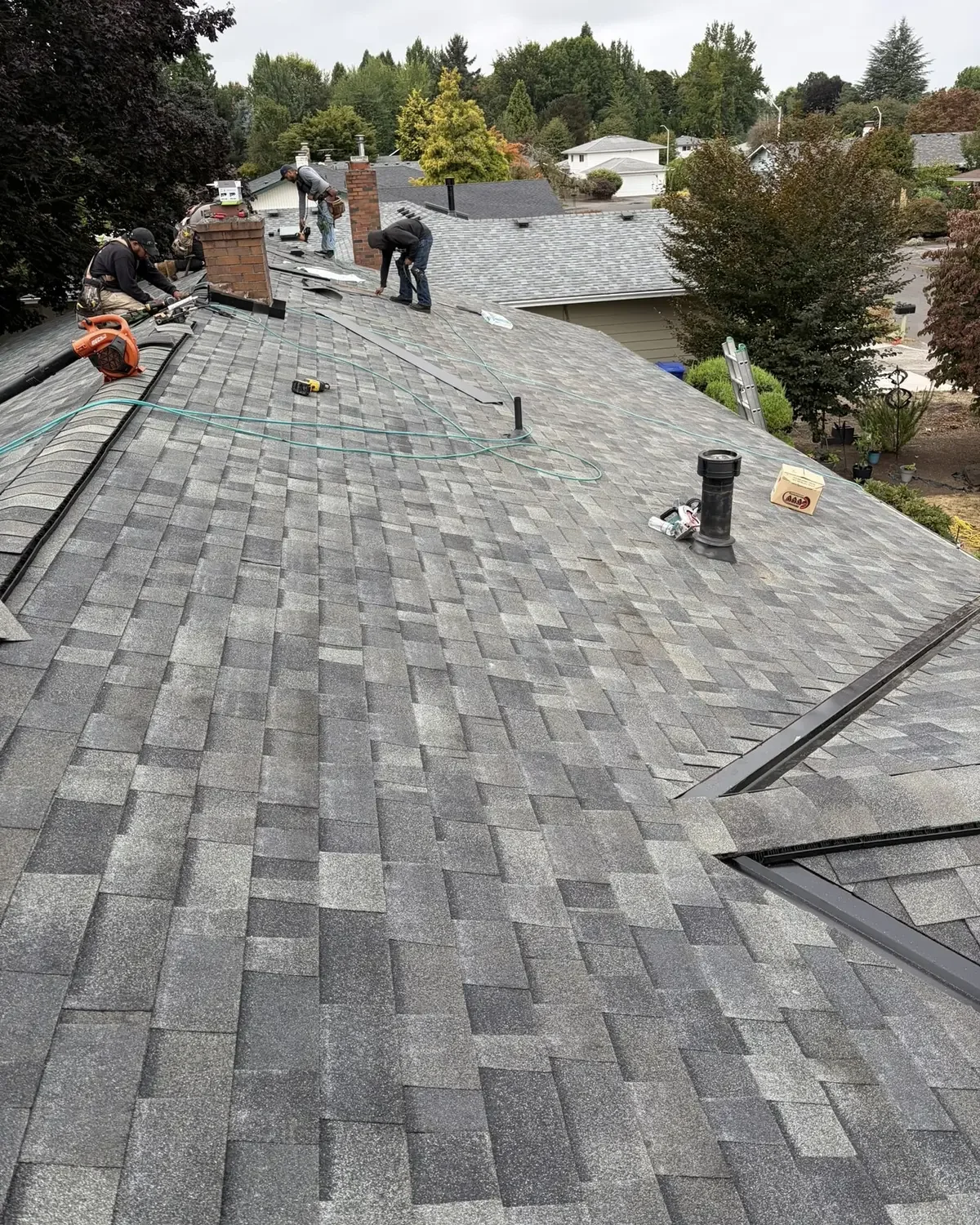
Whether you're dealing with a few warning signs or simply want an honest assessment before committing to a new roof, Rose & Timber Roofing is here to walk through what we find and why. We serve homeowners throughout Portland and nearby communities, including Lake Oswego, Beaverton, West Linn, Hillsboro, Tualatin, Tigard, Gresham, Oregon City, Happy Valley, Milwaukie, Clackamas, and Wilsonville.
Call us at (971) 471-4432 to schedule an inspection, or learn more about our roof repair services if you're dealing with a more localized issue. We provide a clear, written estimate within 24 hours of your inspection so you know exactly what to expect.
